Most booked
Marigold & Umbrellas
Yellow marigold garland curtains, Rajasthani mirrored umbrellas overhead, floor seating with appliqué sheets and bolster cushions. The classic mehndi.
Explore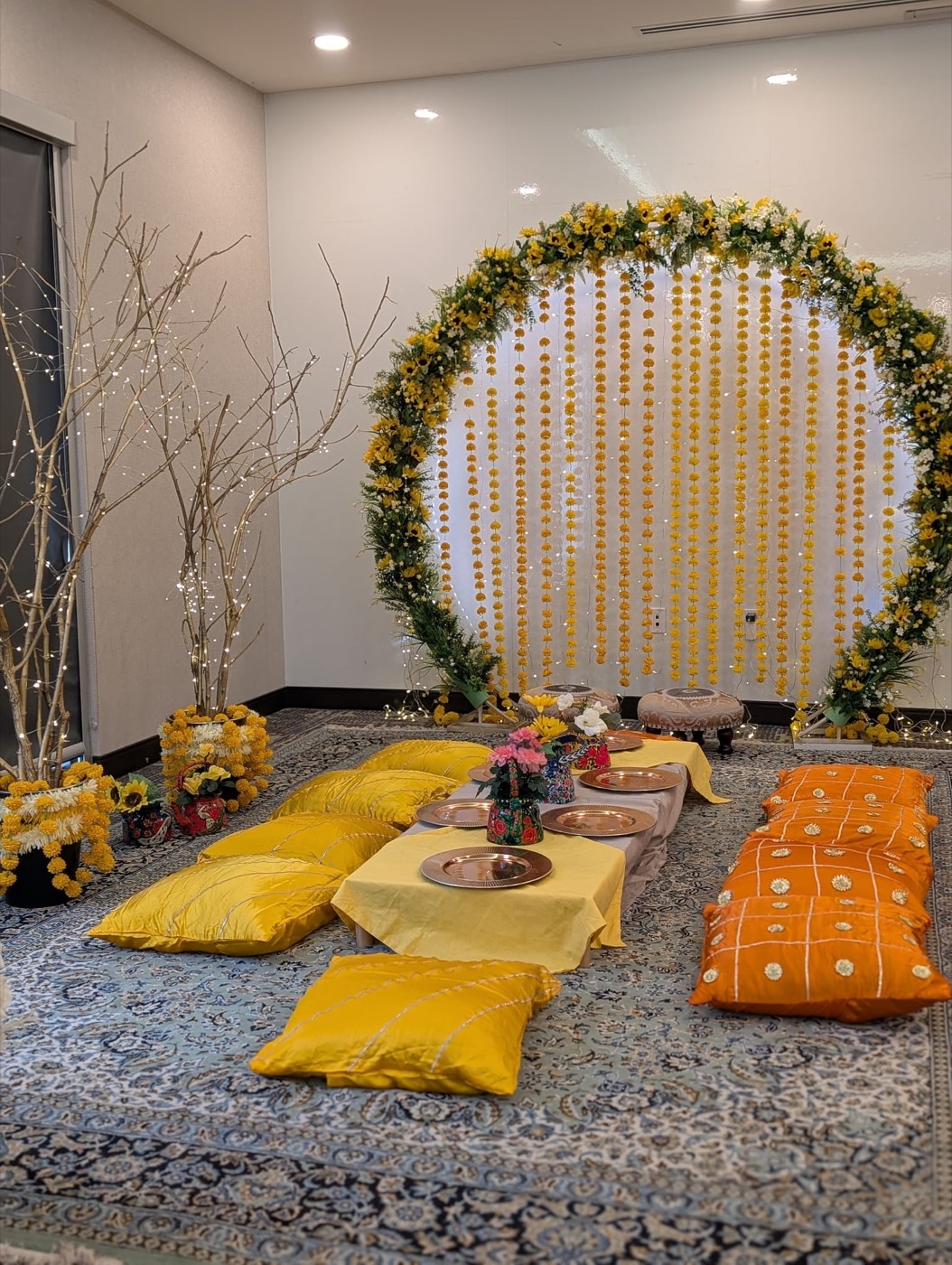
Mehndi · Mehendi · مہندی
Marigold, mirror-work and Rajasthani umbrellas. The loudest, most colourful night of the wedding — and the one where décor does the most work.
Mehndi is the night the rules relax. No white, no restraint — yellow marigold, shocking pink, orange, mirror-work and as many lights as the room will take. It is also the event where décor matters most, because unlike the nikah, there is no ceremony holding the room's attention. The setup is the atmosphere.
We have built mehndi setups across Ottawa in banquet halls, community centres, basements and — through the short northern summer — a great many backyards.
This is our own inventory, not a mood board. These are the items we bring to Ottawa mehndi nights.
The entry is the photograph everyone shares. We make heavily decorated dupattas — chaddar — carried over the bride or groom as they come in, worked with LED lights and flower vines so it reads even in a dim hall.
For the groom, we make traditional floral sehras: the headdress worn at Pakistani, Indian and Bangladeshi weddings, decorated with flowers, beads and gotta work. We also make beaded sehras where the family wants something that survives the night intact.
Ottawa's outdoor season is short and everybody wants the same eight Saturdays in it. Backyard mehndis are genuinely one of our most frequent bookings between June and early September, and they are a different job from a hall.
The considerations are real: ground that is not level, no rigging points, power that has to come from the house, and a hard weather call. Our backdrop stands are freestanding and weighted, our lighting runs off standard household circuits, and we will tell you plainly whether your yard can carry the setup you have in mind.
We also ask every backyard client the same question early — what is the rain plan? Deciding that in advance is the difference between moving a setup calmly and losing the evening.
These four often blur together, and in many Ottawa families they are combined into one or two nights rather than four. The décor overlaps heavily, which is why we quote them together where it saves you money.
If you are running a combined event, tell us — re-dressing one setup across two nights is substantially cheaper than building two.
Here is the practical fact that should drive every mehndi setup and almost never does. A full bridal mehndi takes several hours to apply — intricate work across both hands, forearms and feet.
For that entire time the bride is seated in one place, unable to use her hands, being photographed continuously by everyone in the room while relatives come and sit with her in rotation.
That makes her seat the single most important object at the event — more than the backdrop, more than the ceiling. It needs to be genuinely comfortable for hours rather than just photogenic, positioned so people can sit beside her without blocking the camera, at a height the artist can work at, and lit well enough for close-up photographs of the henna itself.
We build the takhat and the seating area first at a mehndi, and design the rest of the room around it. Most setups do the opposite.
The photographs everybody takes at a mehndi are close-ups of the henna. Those need light falling on the bride's hands, from the front, at close range.
Warm overhead hall lighting throws shadow straight down onto the hands from above, which is exactly wrong. Fairy light curtains behind the seating look beautiful and put light behind the subject, not on her.
So we add a light source at the seating area specifically for this — soft, frontal and close. It is a small addition, it costs very little, and it is the difference between henna photographs that show the detail and ones that show a dark hand.
The mehndi is traditionally hosted by the bride's family, and traditionally the guests are the women of both families. Many Ottawa families now run it as a joint mixed event, and both are entirely normal.
It matters for the build in one specific way: if it is women-only, the room may need a divider or a separate entrance route, and the photography arrangements differ. Tell us which you are having when you enquire rather than after we have planned an open room.
The henna night is usually the last night before the wedding, which is why it is the loudest — it is the release before the formal day. Some families hold it earlier, occasionally up to a month ahead, particularly where guests are travelling to Ottawa from abroad.
That timing affects us directly. A mehndi the night before a barat means we are striking one setup and building another overnight or early the following morning, sometimes at a different venue. It is completely manageable and it needs to be known at booking, not discovered in the schedule.
Three ways families book
Most booked
Yellow marigold garland curtains, Rajasthani mirrored umbrellas overhead, floor seating with appliqué sheets and bolster cushions. The classic mehndi.
ExploreFor photographs
Decorated dupatta with LED and flower vines, floral sehra for the groom, floral hoops and selfie rings. Built for the entrance and the portraits.
ExploreSummer only
Freestanding weighted backdrops, Rajasthani lanterns strung overhead, fairy light curtains and a rain plan agreed in advance.
ExploreSend your date, the venue or your address, and whether it is indoors or in the yard. Faya will come back with what fits.
Good to know
It varies with the size of the setup and whether it is indoors or outdoors. A backdrop with floor seating and marigold garlands is the accessible end; a full stage with Rajasthani umbrellas, takhat, lighting and entry accessories is a larger build.
We are budget-friendly by design. WhatsApp +1 (613) 883-4969 with your date, venue and guest count and Faya will quote you directly.
Yes — it is one of our busiest summer bookings, roughly June through early September. Our backdrop stands are freestanding and weighted, so we do not need rigging points, and our lighting runs from standard household power.
We will walk the yard with you, in person or over video, and tell you honestly what will fit. We also agree a rain plan before the date, which we strongly recommend.
They are mirrored, embroidered parasols suspended above the seating area — a traditional Rajasthani decorative piece and the most recognisable item in our mehndi inventory. They work indoors over a stage or outdoors over floor seating, and they photograph exceptionally well because the mirror-work catches the light.
They can be rented as part of a full mehndi setup or on their own.
Yes, and you should ask about it. Many Ottawa families run these as one or two combined nights rather than four separate events, and the décor overlaps almost entirely.
Re-dressing a single setup across two nights costs considerably less than building two from scratch. Tell us the full run of events when you enquire and we will quote it as a whole.
Yes, both are made to order. The entry dupatta — chaddar — is decorated with LED lights and flower vines so it reads under hall lighting. The sehra is the groom's headdress, made traditionally with flowers, beads and gotta work, or as a beaded sehra where the family wants something more durable.
Both are made in your palette. We need a few weeks' notice for custom colours.
Mehndi nights run late — that is the nature of them. We set up before guests arrive and return for takedown, which is usually the same night after the event or the following morning, depending on your venue's terms.
We agree the takedown window when you book, because halls and community centres in Ottawa vary enormously on this and it affects the quote.
Several hours for full bridal work across both hands, forearms and feet. The bride is seated in one place throughout, unable to use her hands, being photographed the entire time.
That is why we build her seat first and design the room around it — comfort for hours matters more than how the chair photographs empty.
Comfortable for several hours, positioned so relatives can sit beside her without blocking the camera, at a height the henna artist can work at, and lit for close-up photographs.
Most setups treat the backdrop as the priority. At a mehndi the seat is the priority.
Because the photographs everyone takes are close-ups of the henna, and those need soft light on the hands from the front.
Warm overhead hall lighting throws shadow down onto the hands, and fairy lights behind the seating put light behind the subject rather than on her. A small frontal light at the seating area is the difference between henna photos that show the detail and ones that show a dark hand.
Traditionally it is hosted by the bride's family with the women of both families attending, but many Ottawa families now run it as a joint mixed event. Both are entirely normal.
It matters for the build: a women-only mehndi may need a divider or a separate entrance route, and the photography arrangements differ. Tell us at enquiry rather than after we have planned an open room.
Usually, which is why it is the loudest event of the week. Some families hold it earlier — occasionally up to a month ahead — particularly when guests are travelling to Ottawa from abroad.
If your mehndi is the night before the barat, tell us at booking: we are striking one setup and building another overnight, sometimes at a different venue.