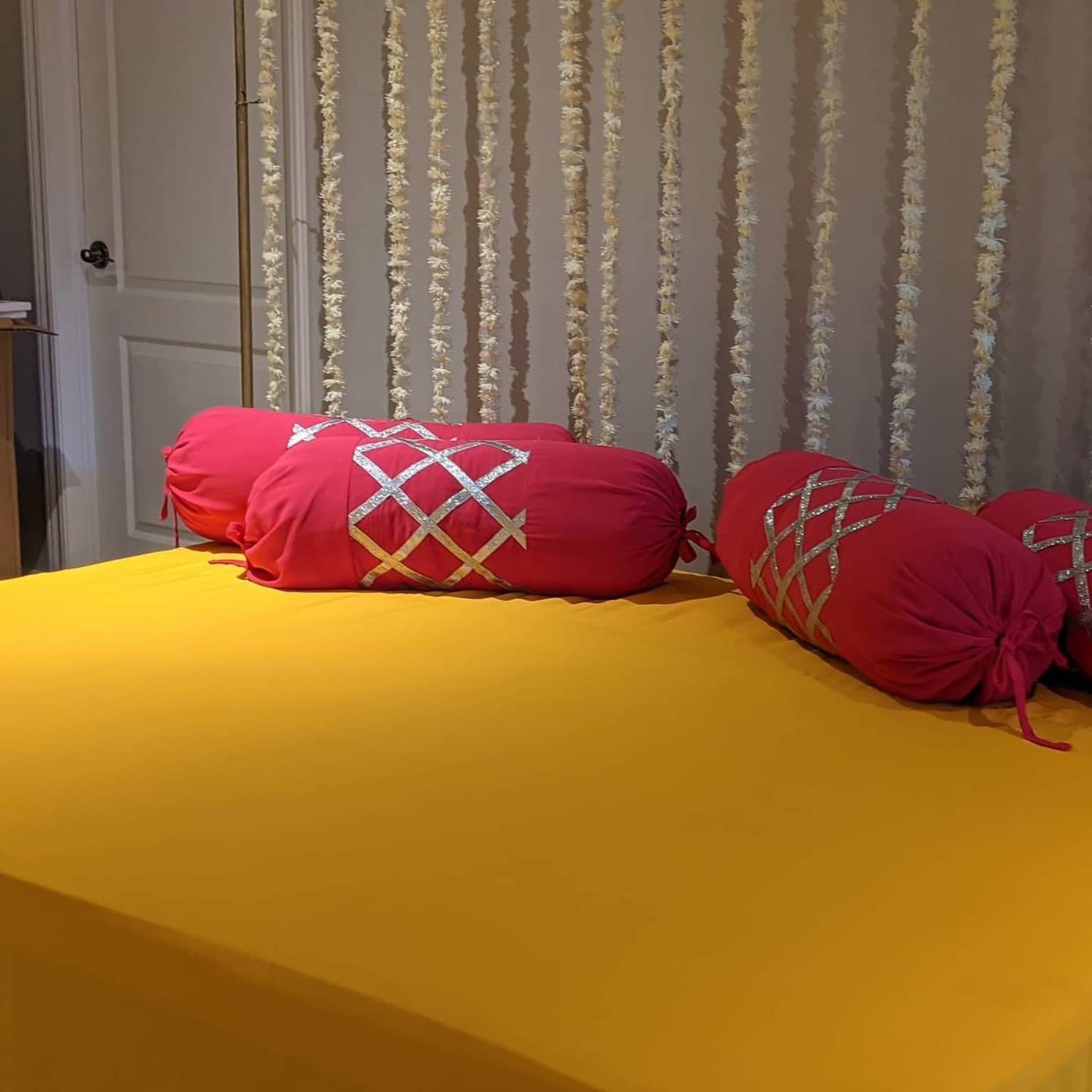
Mayon — maiyan, mayoun — is where the wedding week begins. The bride is dressed in yellow, ubtan is applied by the women of the family, and from that point she traditionally stays home until the wedding.
It is an intimate ceremony, usually at home and among the women closest to the bride. That intimacy is the point of it — and it means the room itself becomes the whole visual memory of the evening.
The yellow-and-marigold setup
Mayon has the strongest colour rule of any event in the sequence: yellow, with marigold at the centre of it. We build to that and we build warm.
- Yellow marigold garlands — hung as curtains behind the seating and draped across the frame
- Floor seating — bolster pillows, cushion covers and traditional multicoloured appliqué sheets
- Takhat / darbari setup — the raised traditional seat for the bride
- Decorated thal — for the ubtan, the oil and the sweets
- Fairy light curtains — mayon is usually an evening event in a normally-lit room
- Rajasthani umbrellas — for families wanting more height in a low-ceilinged room
Built for a living room
Most Ottawa mayons happen at home, which is a genuinely different job from a hall. Ceilings are eight feet, not twenty. Doorways are narrow. The furniture has to go somewhere. And nothing can mark a wall.
Our backdrop stands are freestanding and sized to fit domestic rooms, so we do not need to fix anything to your walls or ceiling. We will ask for a photo or a quick video of the room before quoting — it saves everyone a wasted conversation about a setup that was never going to fit.
Mayon combined with mehndi or dholki
Plenty of Ottawa families fold the mayon into the mehndi or run it the same evening as the dholki. The palettes are close enough that one setup can serve both with a re-dress, which is meaningfully cheaper than two builds.
If you are combining, say so when you enquire — it changes the quote in your favour.
There are usually two mayouns, not one
This is the thing most families do not plan for. The mayoun is traditionally held at each of the couple's parental homes — the bride has hers among her family, and the groom has his among his, generally on the same day, one day before the wedding.
So the honest question when you enquire is: are you decorating one home or two? Plenty of families in Ottawa run both and only think to book the bride's, then scramble for the groom's the week before.
If both are happening, tell us. Two setups on the same day at two addresses is a scheduling job, and it is considerably cheaper booked together than as an emergency second booking.
Ubtan stains everything — and we plan for it
This is the practical warning nobody gives you, and it is the single most useful thing on this page.
Ubtan is a turmeric paste — turmeric with essential oils, herbs and sandalwood — and it is applied by hand to the bride's face, hands and feet by a room full of relatives who are, correctly, not being careful. Turmeric stains permanently. Fabric, cushion covers, carpet, grout, and pale upholstery.
So for a mayoun we build with that assumed: darker or patterned floor coverings under the seating area rather than pale ones, protection under the takhat, and the good drape kept clear of the application zone rather than framing it.
It is also worth protecting your own floor before we arrive, and worth warning guests in pale clothing. We would rather say this than have you discover it on your living-room carpet.
Why yellow, and why turmeric
The colour is not decorative. Turmeric's yellow is held to symbolise purity, fertility and protection from harm, and the ubtan ritual is understood as preparing and protecting the bride before she leaves her family's home.
That is why the palette rule at a mayoun is stricter than at a mehndi. Yellow and marigold are the ceremony, not a colour scheme, and a pastel mayoun reads as having missed the point.
The same ceremony appears across the region under different names — mayian, vatna, maiyun, and in Hindu families haldi. The ritual and the palette are close enough that we build them the same way; tell us which your family calls it and we will use your word.
Tell us your date
Send your date, venue and guest count on WhatsApp. Faya will come back to you directly with what fits and what it costs.
Good to know
Questions we get asked
Mayon — also spelled maiyan or mayoun — is the ceremony that opens a Pakistani wedding week. The bride wears yellow, ubtan (a turmeric paste) is applied by female relatives, and traditionally she remains at home until the wedding.
It is usually held at the family home among close relatives, which is why the setting matters so much: there is no venue doing any of the work for you.
Mayon is one of our more accessible bookings because these are home ceremonies rather than hall builds. The cost is driven by the size of the backdrop, whether you want floor seating and a takhat, and how much lighting the room needs.
WhatsApp +1 (613) 883-4969 with your date and a photo of the room for a quick quote.
Yes — most of the mayons we do are in family homes across Barrhaven, Kanata, Orléans and Nepean. Everything is freestanding, so nothing is fixed to your walls or ceiling and the room is left as we found it.
Send a photo or short video of the room when you enquire and we will tell you honestly what fits.
Yes. We make decorated thal and velvet fancy trays for the ubtan, the oil, the mithai and the shagan. They are photographed constantly during the ceremony, so they are worth doing properly.
They can be added to any mayon or mehndi booking.
Often, yes. The palettes overlap heavily — yellow and marigold for mayon, marigold and multicolour for mehndi — so one build can serve both with a re-dress between them.
This is considerably cheaper than two separate setups. Tell us your full run of events and we will quote it as one project.
Traditionally two — the bride has hers at her parents' home and the groom has his at his, usually the same day, one day before the wedding.
Many Ottawa families run both and only book the bride's, then scramble for the groom's. If both are happening, tell us at enquiry: two setups on one day is much cheaper booked together than as an emergency second booking.
Turmeric stains permanently — fabric, cushions, carpet, grout and pale upholstery. It is applied by hand by a room full of relatives who are not being careful, which is the point of the ceremony.
We build for it: darker or patterned coverings under the seating, protection beneath the takhat, and the good drape kept clear of the application zone. Protect your own floor before we arrive and warn guests in pale clothing.
Because turmeric is the ceremony, not a colour scheme. Its yellow symbolises purity, fertility and protection, and the ubtan ritual prepares and protects the bride before she leaves her family home.
That is why the palette rule here is stricter than at a mehndi — a pastel mayoun reads as having missed the point.
They are regional and family names for the same preparation ceremony — turmeric paste applied to the bride before the wedding. Haldi is the more common term in Hindu families.
The ritual and the palette are close enough that we build them the same way. Tell us which word your family uses and we will use it.