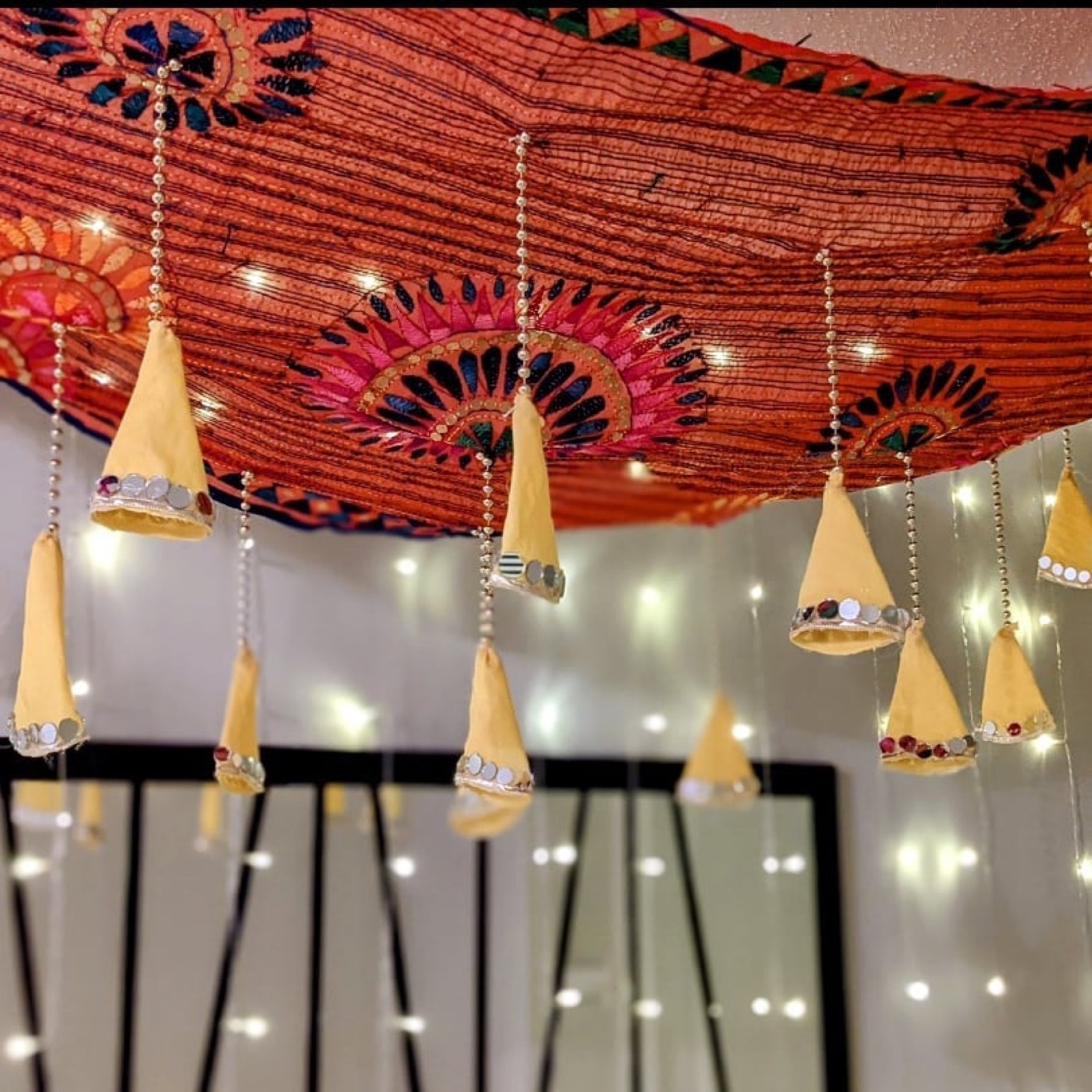
Punjabi weddings run loud and run long, and the pre-wedding nights carry as much weight as the day itself. We decorate the full sequence for Ottawa families.
The ceremonies here are distinct enough that a generic 'Indian wedding' package misses them. Jago in particular is almost never catered for by Ottawa decorators — we build for it specifically.
The Punjabi sequence
- Jago — decorated gaggar pots, lighting and a procession route
- Chunni chadhai — the groom's family presenting the chunni; a small, seated setup
- Mehndi — marigold, umbrellas, floor seating
- Sangeet — boliyan and choreographed sets, with the floor kept clear
- Anand Karaj reception — the celebration following the gurdwara ceremony
- Maiyan / haldi — yellow and marigold
Gurdwara ceremonies and receptions
The Anand Karaj itself takes place in the gurdwara and is not decorated — that is the point of it. What we decorate is everything around it: the reception, the pre-wedding nights and the home.
We are careful about this distinction, and we mention it because families occasionally ask and are relieved that we understand the boundary rather than having to explain it.
Jago décor specifically
We decorate the gaggar with florals, mirror-work, gotta and lighting — and we build it to be carried on a head and passed around, which is a different construction from something built to sit on a table.
For Ottawa winters we build the procession route indoors: entry, hallway and stair décor, so the movement and the photographs still work without anyone standing outside in February.
Where the décor budget actually goes at a Punjabi wedding
The Anand Karaj itself is not decorated — it takes place in the gurdwara, and that is deliberate. So unlike a Pakistani or Hindu wedding, the ceremony is not where any of the money goes.
That reallocates the whole budget toward the pre-wedding nights and the reception. In practice the biggest builds at a Punjabi wedding are the sangeet stage and the reception room, with the jago, chunni and maiyan handled as smaller home setups.
It also means the reception has to work harder, because it is the only large decorated space of the wedding. Guests who saw no décor at the ceremony are seeing it all at once.
Colour, and why Punjabi events take more of it
Punjabi wedding palettes run brighter and warmer than the ivory-and-blush direction common at Western receptions — hot pink, orange, fuchsia, marigold, gold, and phulkari-inspired multicolour.
That is not a lack of restraint, it is a different tradition of what a celebration looks like, and it photographs beautifully under warm banquet lighting where pastels go muddy. Our marigold, mirror-work and Rajasthani pieces suit these events particularly well.
If your family wants something quieter — and plenty do — we will build it. But we will point out that a very pale palette under an Ottawa hall's yellow lighting can end up looking washed rather than elegant.
Building for boliyan and bhangra
Punjabi events move. Boliyan are call-and-response, bhangra is not a seated activity, and the floor fills early and stays full.
So the design rule is the same as for a sangeet: the stage and the seating go to the perimeter, the centre stays clear, and nothing freestanding sits where a dance circle will form. We ask about the running order for exactly this reason.
The dhol is the other consideration — it moves through the room rather than staying on a stage, so processional routes need to stay open too.
Tell us your date
Send your date, venue and guest count on WhatsApp. Faya will come back to you directly with what fits and what it costs.
Good to know
Questions we get asked
Yes — the gaggar, decorated with florals, mirror-work, gotta and lighting, and built to be carried and passed around during the dancing rather than only photographed.
See our jago décor page for the full setup.
No — the Anand Karaj takes place in the gurdwara and is not decorated. That is by design and we respect it.
What we decorate is everything around it: the reception, the pre-wedding nights, and the family home.
It is the ceremony where the groom's family presents the bride with a chunni, along with jewellery and gifts. It is usually a small seated gathering at home.
Yes, we set these up — a backdrop, seating and decorated trays for the gifts.
Yes, and it usually has to. We build the procession route inside the house — entry, hallway and staircase décor — so the movement still happens.
Stair décor is one of our most-requested items for exactly this reason.
It depends on how many of the pre-wedding nights you are running and where. Jago and chunni setups are small; a sangeet and reception are larger builds.
Send the full run of events on WhatsApp to +1 (613) 883-4969 and we will quote the sequence.
The sangeet and the reception. The Anand Karaj takes place in the gurdwara and is not decorated, so unlike a Pakistani or Hindu wedding there is no ceremony build.
That reallocates the budget to the pre-wedding nights and the reception — and it means the reception works harder, because it is the only large decorated space of the wedding.
Brighter and warmer than a typical Western reception — hot pink, orange, fuchsia, marigold, gold and phulkari-inspired multicolour.
These photograph beautifully under the warm yellow lighting in most Ottawa banquet halls, where pale palettes can end up looking washed rather than elegant.
Stage and seating to the perimeter, centre kept clear, and nothing freestanding where a dance circle will form.
We also keep processional routes open, because the dhol moves through the room rather than staying on a stage. We ask about the running order for exactly this.