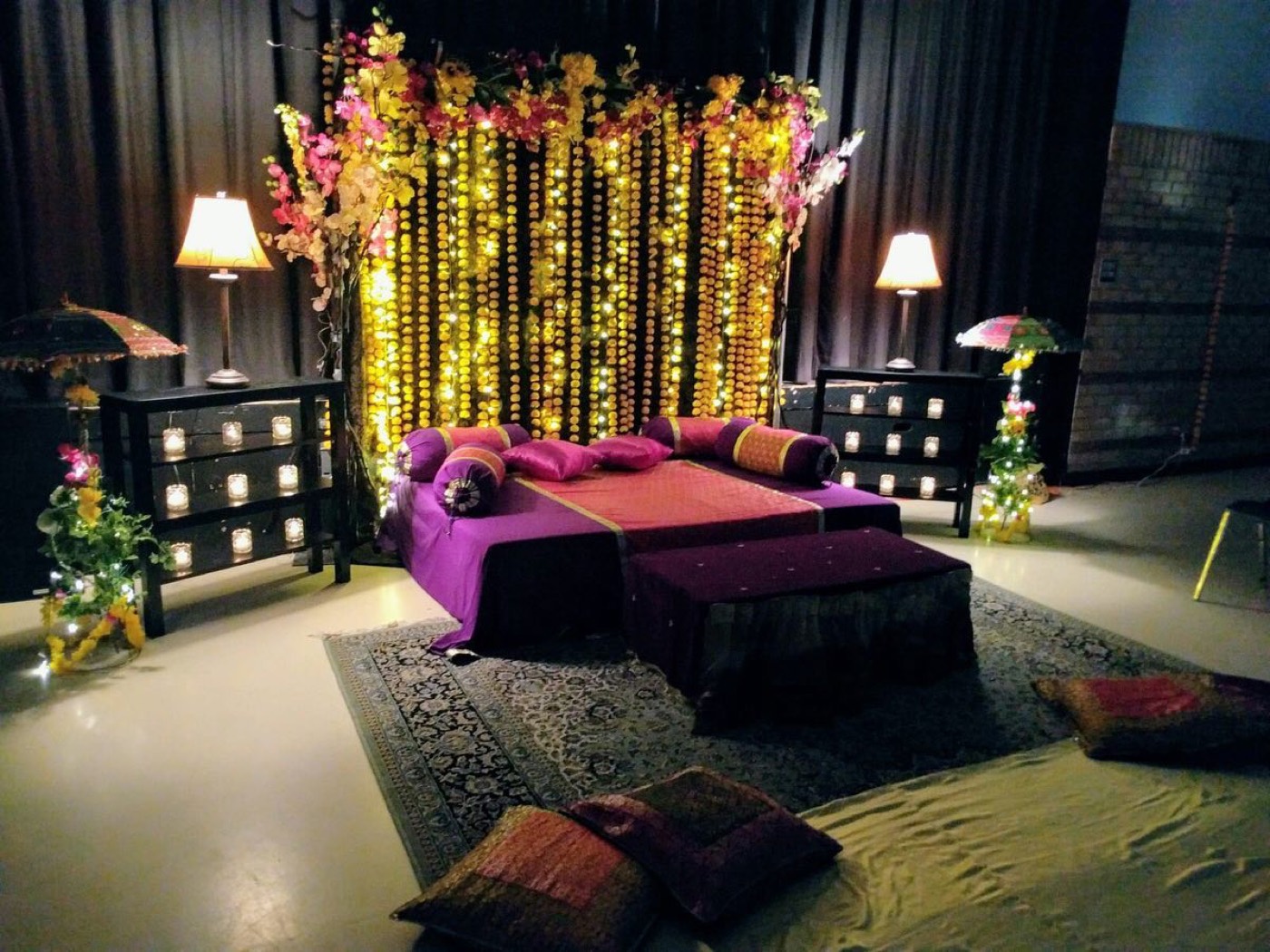
Dua-e-Khair is the prayer gathering held before a wedding, asking for blessing on the couple. It is a calm, often women-only event, and it sits deliberately apart from the noise of the mehndi and the scale of the barat.
We have set these up for Ottawa families and the brief is consistent: elegant, soft, and restrained. This is not the event for marigold curtains and mirror-work.
A setup that matches the occasion
The palette runs white, ivory, soft green and pale gold. The build is simple and finished rather than large.
- Ivory jersey curtain backdrops — soft folds, nothing patterned
- White wisteria garlands and ivory rose bunches
- Off-white floor lanterns and floating candles
- Floor seating with clean covers where the gathering is seated traditionally
- Decorated thal for mithai and tabarruk
- Green leaves backdrop for a natural, quiet feel
Usually at home
Most Dua-e-Khair gatherings we set up in Ottawa are in family homes. That means freestanding stands, nothing fixed to walls, and a setup sized for a normal room.
It is a small booking and an inexpensive one. It is also, in our experience, one that families are genuinely glad they did — because it is often the only event of the week without a crowd, and the photographs from it are the calm ones.
The one event of the week designed to be quiet
Every other event in a wedding sequence is competing for attention. The Dua-e-Khair is deliberately not.
That makes it the hardest brief in the week to get right, because the instinct — and the instinct of most decorators — is to add. A Dua-e-Khair over-decorated to mehndi standards reads as a mistake to everyone in the room, and it is a mistake we have been asked to correct.
The correct answer is a small number of well-made things: clean drape, soft florals, floor lanterns, good light. Restraint here is not a smaller budget, it is the actual design requirement.
Seating is the practical brief
These gatherings are frequently seated on the floor, often women-only, and often with a wide age range — grandmothers through to small children in the same room.
So the real work is seating rather than backdrop. Enough floor cushions and bolsters for everyone who wants them, and — this is the part that gets forgotten — chairs available at the edge for anyone who cannot sit on the floor comfortably, positioned so using one does not feel like being separated from the gathering.
We plan that seating with you. At a Dua-e-Khair it matters considerably more than the drape behind it.
The tabarruk and the thal
Food is part of the observance rather than hospitality around it. Mithai and tabarruk are distributed, and the trays they are served from are handled and photographed at close range by everybody present.
Decorated thal and velvet trays are a small booking that fits this event particularly well, precisely because it is one of the few things at a restrained gathering that can carry some detail without breaking the tone.
Almost always at home, and what that means
Most Dua-e-Khair gatherings we set up are in family living rooms — which means eight-foot ceilings, a room that has to be cleared of its usual furniture, and nothing that can mark a wall.
Everything we bring is freestanding and sized for domestic rooms. Send a photo of the space when you enquire and we will tell you honestly what fits, and — as often as not — what you do not need.
It is one of our smaller and most affordable bookings, and in our experience one families are consistently glad they made, because it is usually the only gathering of the week without a crowd, and the photographs from it are the calm ones.
Tell us your date
Send your date, venue and guest count on WhatsApp. Faya will come back to you directly with what fits and what it costs.
Good to know
Questions we get asked
It is a gathering for prayer and blessing held before a wedding, asking for good outcomes for the couple. It is often women-only, usually held at home, and is one of the quieter events in the wedding sequence.
Some families combine it with a milad or Quran khwani.
Restrained. White, ivory, soft green and pale gold — ivory drape, wisteria garlands, floating candles and floor lanterns.
The mistake would be treating it like a mehndi. This is the one event of the week where less is genuinely the correct answer.
Yes, almost always. These gatherings are usually held in family homes across Ottawa, and our stands are freestanding and sized for domestic rooms, so nothing is fixed to your walls.
Send a photo of the room and we will tell you what fits.
It is one of our smaller and more affordable bookings, since the setups are modest by design.
WhatsApp +1 (613) 883-4969 with your date and a photo of the space for a quick quote.
Yes. Where the Dua-e-Khair is held at the same venue as another event in the week, we can often re-dress a setup rather than build twice, which reduces the cost.
Tell us the full sequence of events when you enquire.
Less than you think, and that is the design requirement rather than a budget compromise. A small number of well-made things: clean drape, soft florals, floor lanterns, good light.
Over-decorating it to mehndi standards reads as a mistake to everyone in the room — and it is a mistake we have been asked to correct.
The seating. These gatherings are usually seated on the floor with a wide age range in one room.
Enough cushions and bolsters, and chairs available at the edge for anyone who cannot sit on the floor comfortably — positioned so using one does not feel like being separated from the gathering. It matters more than the drape.
Yes — decorated thal and velvet trays. Food distribution is part of the observance rather than hospitality around it, and the trays are handled and photographed at close range.
It is one of the few things at a restrained gathering that can carry detail without breaking the tone.
Yes — almost all of these are in family living rooms. Everything is freestanding and sized for domestic ceilings, so nothing is fixed to your walls.
Send a photo and we will tell you what fits and, as often as not, what you do not need.